"What should I study after school?" A few years ago, this question would likely have led a student to a teacher, parent, or career counselor. Today, many students ask Artificial Intelligence (AI) first. Within seconds, tools such as ChatGPT and Gemini can recommend courses, compare universities, explain admission requirements, and even suggest career options based on a student's interests.
There is no denying that AI has transformed access to career information. What once required hours of research can now be accomplished in minutes. Yet, while AI has changed how students gather information, it has not changed one important reality: choosing a career is not simply an information problem; it is a human decision. This is why the role of counselors remains not only relevant but increasingly important in the age of AI.
AI has become a valuable resource for students for several reasons. First, it provides access to an enormous amount of information. Students can quickly learn about universities, entrance examinations, scholarships, fee structures, employment trends, and emerging career fields. Instead of relying on scattered sources, they receive organized information almost instantly.
Second, AI encourages exploration beyond conventional career paths. As industries continue to evolve, students are introduced to opportunities in fields such as artificial intelligence, sustainability, data science, digital content creation, and other professions that may not have existed a decade ago. This broader exposure allows students to make more informed career choices.
Finally, AI offers unmatched accessibility. Unlike traditional counseling sessions, AI tools are available at any time, allowing students to ask questions, compare options, and continue exploring at their own pace.
Despite these advantages, access to information alone does not guarantee good decisions. Career planning involves far more than comparing courses or reading job descriptions. It requires self-awareness, confidence, and the ability to make decisions under uncertainty—areas where human counselors continue to play a unique role.
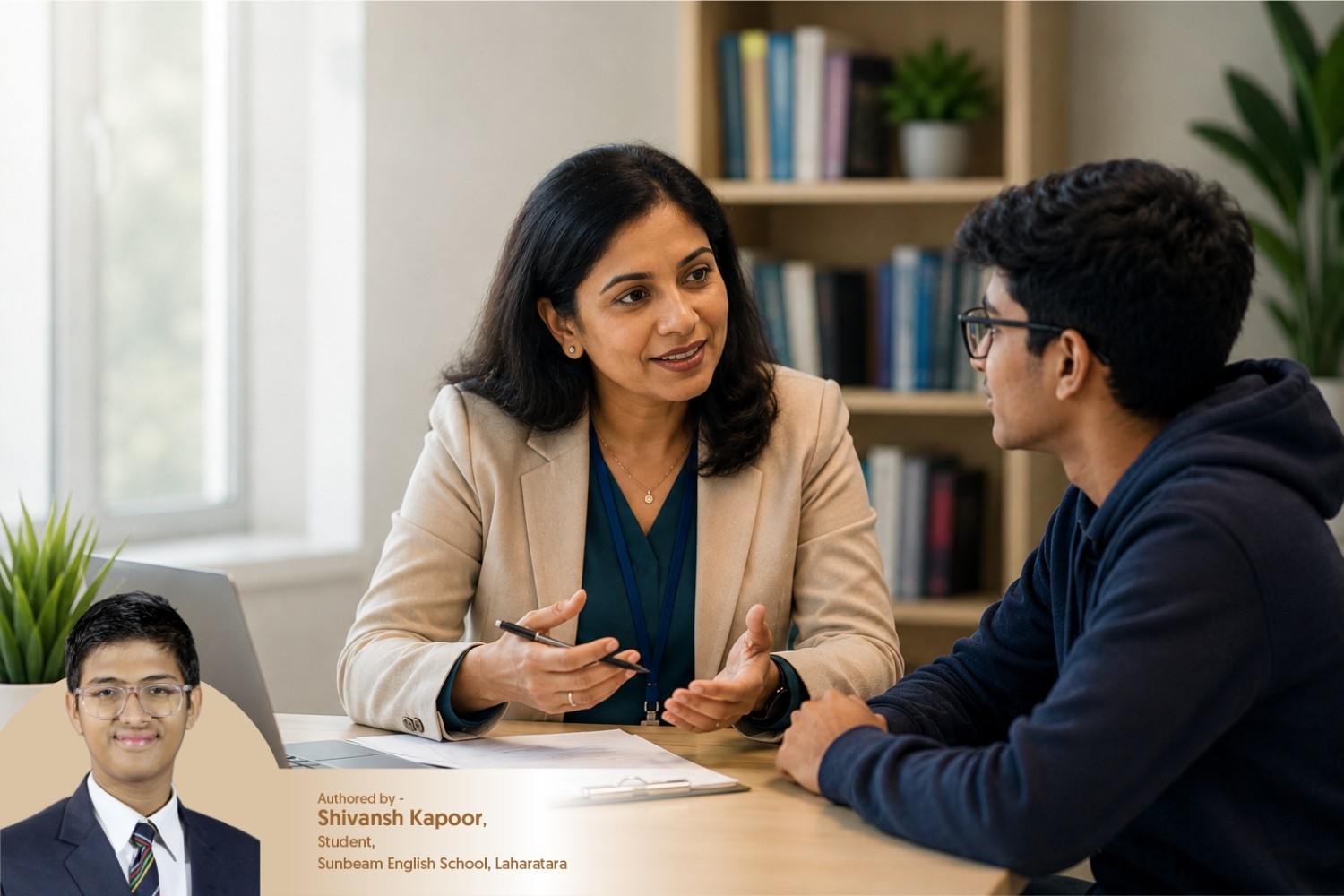
One of the greatest strengths of a counselor is the ability to understand the individual behind the academic profile. AI interprets prompts and generates responses based on available data. A counselor, however, interprets emotions, body language, hesitation, and personal circumstances. They recognize concerns that students may struggle to express and adapt their guidance accordingly.
Consider a student who wants to study engineering but hesitates because of repeated comments about the field's uncertain future. AI may present employment statistics, salary data, and alternative career options. A counselor, however, is likely to explore the student's interests, strengths, fears, and long-term aspirations before helping them reach a decision. The information remains valuable, but the conversation provides the clarity that data alone cannot offer.
Counselors also help students navigate the emotional complexity of career decisions. Many students experience anxiety about disappointing their families, fear of failure, or uncertainty about choosing the "right" career. In such situations, they often need reassurance before they need recommendations. By creating a supportive environment, counselors help students develop confidence and make thoughtful decisions rather than reacting to pressure or uncertainty.
Another important distinction lies in ethical and contextual judgment. AI generates responses by identifying patterns within existing information, but it cannot fully understand an individual's personal values, cultural background, or life experiences. Counselors integrate these factors into their guidance, ensuring that career decisions reflect not only opportunities but also the student's aspirations and circumstances.
As AI becomes increasingly integrated into education, the role of counselors is also evolving. Rather than serving primarily as providers of information, counselors are becoming architects of long-term career development.
Modern careers rarely follow a single, predictable path. Students are likely to change industries, acquire new skills, and adapt to technological changes throughout their professional lives. Consequently, counselors help students build adaptable career journeys rather than preparing them for one fixed destination. Their focus extends beyond selecting a course to developing resilience, adaptability, and lifelong learning.
Counselors also play an essential role in helping students manage information overload. AI can generate hundreds of recommendations within seconds, but not every recommendation is equally relevant or reliable. Students may become overwhelmed by conflicting advice, rankings, and online opinions. Counselors help them evaluate this information critically, separate facts from misconceptions, and focus on choices that genuinely align with their goals.
Perhaps the most significant contribution of counselors is helping students discover purpose. AI can identify careers that match a student's interests or skills, but purpose cannot be calculated through algorithms alone. Counselors encourage students to reflect on their values, motivations, and aspirations, helping them understand not only what they can do but also what they genuinely want to pursue. Career success is measured not only by employment but also by personal fulfillment and meaningful contribution.
Finally, counselors prepare students for a future that remains uncertain. Many of tomorrow's careers have yet to be fully defined. Rather than focusing solely on current job titles, counselors emphasize transferable skills such as critical thinking, communication, collaboration, creativity, and adaptability. These competencies enable students to thrive regardless of how the employment landscape evolves.
The future of career guidance should therefore not be framed as a competition between AI and counselors. Instead, it should be viewed as a partnership in which each contributes distinct strengths. AI excels at delivering information quickly, identifying patterns, and expanding career awareness. Counselors provide interpretation, empathy, ethical judgment, and the human connection necessary for meaningful decision-making.
As technology continues to reshape education and work, students will undoubtedly benefit from AI-powered tools. However, they will also continue to need trusted professionals who can help them understand themselves, navigate uncertainty, and transform information into purposeful action.
Ultimately, the question is not whether AI will replace counselors, but whether information can ever replace wisdom. Information may open doors, but wisdom helps students choose which ones to walk through.