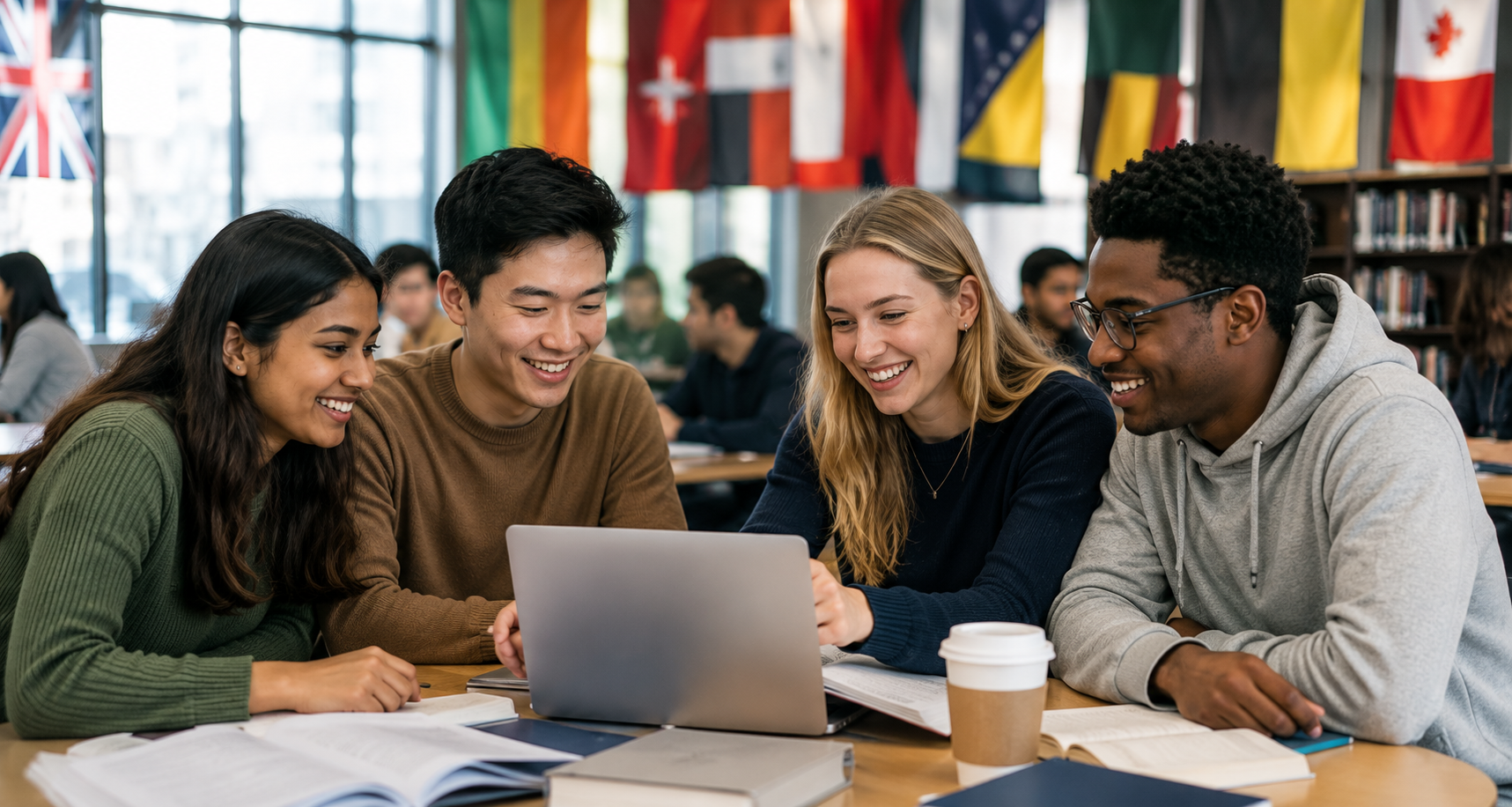
In today's interconnected world, preparing students for success means preparing them for a world that extends far beyond their own borders. Whether students choose to study internationally, work in multinational organizations, build global businesses, or solve challenges that transcend countries, they will inevitably be part of a global ecosystem. The question is no longer whether education should have an international outlook, but how schools, universities, and educators can work together across borders to make that vision a reality.
Cross-border collaboration has become one of the most powerful drivers of student success. It enables institutions to exchange ideas, broaden opportunities, and create learning experiences that prepare young people not only for higher education, but also for meaningful careers and responsible global citizenship.
For many years, education systems largely operated within national boundaries. Schools focused on preparing students for local universities, while higher education institutions developed their own independent recruitment and engagement strategies.
Today, those boundaries are becoming increasingly fluid.
Students are exploring universities across continents, employers are building globally distributed teams, and technological advances have made international collaboration more accessible than ever before. As a result, supporting students effectively requires educators, counselors, universities, policymakers, and industry leaders to work together rather than in isolation.
When schools understand evolving higher education expectations, universities gain deeper insight into student aspirations, and industry contributes perspectives on emerging workforce needs, students receive guidance that is more informed, balanced, and future-focused.
Cross-border collaboration is often associated with international student mobility, but its value extends far beyond studying abroad.
Through partnerships between schools and universities, students gain exposure to different education systems, academic pathways, scholarship opportunities, and career possibilities they may never have otherwise considered.
Virtual exchange programs, collaborative classroom projects, international webinars, educator networks, and global conferences have made it possible for students to develop international perspectives regardless of where they live.
For students from underserved communities or regions with limited access to global institutions, these connections can be transformative. Even a single interaction with an international educator or university representative can inspire new ambitions and expand what students believe is possible.
Ultimately, access to global perspectives should not be determined by geography.
One of the greatest strengths of international education is its ability to expose learners to diverse ways of thinking.
Students who engage with peers, educators, and institutions from different cultures learn to appreciate multiple viewpoints, challenge assumptions, and approach problems with greater empathy. These experiences foster adaptability, cultural awareness, and critical thinking, qualities that employers increasingly value in a rapidly changing world.
Cross-border collaboration also benefits educators.
School leaders and career counselors gain valuable insights by sharing best practices with colleagues across countries. Whether discussing approaches to student well-being, career guidance, university admissions, or curriculum innovation, these exchanges encourage continuous learning and help institutions strengthen their own practices.
When educators learn from one another, students benefit the most.
Career and college counseling has evolved significantly over the past decade.
Students today are navigating an increasingly complex landscape of university options, interdisciplinary programs, changing admission requirements, emerging careers, and rapidly evolving workplace expectations. No single institution can provide all the answers.
Meaningful partnerships between schools and higher education institutions help bridge this gap.
When universities engage consistently with counselors, not only during recruitment cycles but throughout the year, they contribute valuable insights into academic offerings, campus experiences, financial aid opportunities, and evolving admission trends. In turn, counselors provide universities with a deeper understanding of students' aspirations, concerns, and local educational contexts.
This two-way dialogue enables students to make more informed decisions that align with their interests, strengths, and long-term goals rather than relying solely on rankings or perceptions.
The future of work is increasingly international.
Teams collaborate across multiple time zones, digital platforms connect professionals from different continents, and many of the world's most pressing challenges, from sustainability to healthcare innovation, require international cooperation.
Technical knowledge alone is no longer sufficient.
Employers consistently seek graduates who can communicate across cultures, collaborate effectively with diverse teams, think critically, and adapt to changing environments. These competencies are developed not only in classrooms but also through meaningful exposure to global perspectives and collaborative experiences.
Cross-border educational partnerships help cultivate these skills long before students enter the workforce. Whether through international projects, collaborative research, exchange programs, or global mentorship opportunities, students learn to navigate complexity with confidence.
These experiences prepare them not just for their first job, but for careers that will continue evolving throughout their lives.
Perhaps the most important outcome of cross-border collaboration is the creation of a stronger educational community.
The challenges facing education today, such as rapid technological change, shifting workforce demands, student well-being, equitable access, and lifelong learning, are shared across countries. While contexts may differ, the underlying questions remain remarkably similar.
No institution, country, or education system has every solution.
Progress happens when educators listen to one another, exchange ideas openly, and work collectively to improve student outcomes. International collaboration encourages innovation because it brings together diverse experiences, perspectives, and approaches that may not emerge within a single system.
Rather than viewing education as a competitive landscape, global partnerships encourage us to see it as a shared mission centered on student success.
As education continues to evolve, collaboration across borders will become even more essential. Technology has made global connections easier than ever, but meaningful partnerships still depend on trust, dialogue, and a shared commitment to supporting students.
When schools, universities, counselors, policymakers, and industry leaders come together, they create opportunities that no institution could achieve alone. They empower students to think beyond borders, embrace diverse perspectives, and make informed decisions about their futures.
Student success has never been confined to a single classroom, institution, or country. It is shaped by the collective efforts of a global community committed to helping every learner thrive.
In an increasingly interconnected world, cross-border collaboration is not simply a valuable addition to education; it is one of its greatest necessities.