23 to 24 January 2026, O. P. Jindal Global University, Sonipat, Haryana, India
As the IC3 Movement enters its landmark tenth year, we find ourselves at a meaningful moment of reflection and renewal. The past decade has shown what is possible when educators, counselors, universities, and partners come together with a shared belief that counseling belongs in every school. This belief has grown into a powerful global movement. Today, it continues to deepen its impact in ways that are practical, inclusive, and grounded in real student needs.
The IC3 Regional Conference South Asia is one of the defining expressions of this evolution. This gathering is not only an event, but a space designed for deeper insight, collaboration, and community. It invites participants to pause, look inward, and rediscover the joy and purpose in counseling and education.
South Asia represents one of the most dynamic education ecosystems in the world, with millions of students navigating rapidly shifting academic, social, and career landscapes. The expectations on schools and counselors have expanded significantly. Students are overloaded with information, yet crave clarity. Families are more involved in decision-making than ever before. Universities are seeking stronger, more authentic relationships with schools.
This conference arrives at a time when the region is ready for a renewed, thoughtful approach to counseling. It encourages participants to move beyond the noise of information and into a space of insight and reflection. It offers a chance to understand emerging trends through a regional lens, while staying connected to global perspectives. Most importantly, it provides a platform for meaningful dialogue among the people who shape the lives of young learners every day.
What makes this conference truly unique is its residential format. Participants stay together on campus at O. P. Jindal Global University, creating the perfect setting for immersive learning. When educators live and learn in the same space, conversations deepen naturally. People connect more honestly. Ideas flow more freely. Trust builds in an organic, meaningful way.
The residential experience encourages collaboration that extends far beyond structured sessions. Breakfast conversations lead to new partnerships. An evening walk across campus opens up unexpected insights. Shared meals become moments of collective reflection. This environment cultivates long-lasting relationships that continue to guide and support educators long after they return to their own institutions.
The theme for the 2026 Regional Conference South Asia is “Looking Deeply From Information to Insight.” This theme reflects a truth that every educator and counselor knows well. The world offers more information than ever before, but far less space for thoughtful interpretation.
Students are surrounded by choices, opinions, opportunities, and expectations. Counselors guide them not by adding more information, but by helping them understand themselves and their paths with clarity. Insight is what empowers students to make confident, authentic decisions.
Throughout the conference, participants will explore how to cultivate this deeper understanding in their practice. Discussions will focus on how to support young people in navigating complexity, managing overwhelm, and discovering direction with purpose.
The conference unfolds over two immersive days, supported by an optional arrival day that eases participants into the experience. The schedule blends structured learning with moments of relaxation, wellness, and informal conversations.
Participants arrive on campus, settle into their accommodation, and enjoy relaxed interactions. Optional campus tours and pre-conference sessions set a welcoming tone. The evening includes a warm dinner that encourages introductions and reconnections.
The first morning begins with meditation or a gentle wellness activity that grounds participants for the day ahead. The opening plenary sets the stage for the theme, followed by engaging breakout sessions where counselors, school leaders, and university partners share best practices and lived experiences.
Interactive formats such as Conversations Over Coffee and Network 10x ensure that learning is not confined to presentations alone. The day ends with campus-wide social activities that allow participants to unwind and build meaningful relationships in a relaxed setting.
The second day continues the rhythm of wellness and learning. Participants attend focused discussions and sessions that deepen the insights from Day 1. The closing plenary brings the community together to reflect on what has been learned, what lies ahead, and how the bonds formed during the conference can continue to strengthen the counseling ecosystem.
The conference concludes with a final shared meal, leaving participants with a sense of belonging, purpose, and renewed energy.
The Regional Conference brings together a community that includes:
This diversity enriches the dialogue and allows participants to engage with different perspectives. When people from various backgrounds share experiences, the learning becomes more grounded and multidimensional. This blend of voices strengthens the foundation of the IC3 Movement and broadens its impact across the region.
Every part of the conference is designed to create space for reflection and exchange. The residential environment means that learning continues in hallways, over tea, during campus walks, and late into the evening. These are the moments when true connection happens. They are often the spark for collaborations, school-university partnerships, and cross-regional projects that shape the future of counseling.
Participants also gain the opportunity to understand how an integrated campus environment contributes to student well-being. As they experience community living firsthand, they gain insights that can be applied in their own schools.
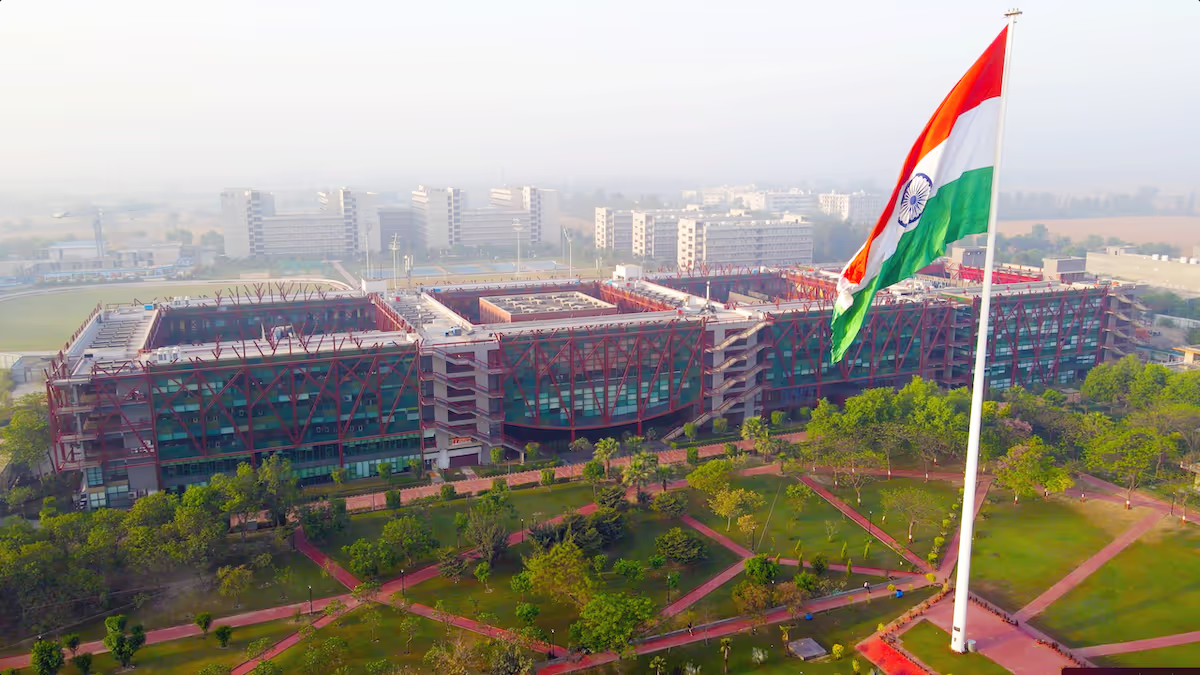
Hosting the conference at O. P. Jindal Global University brings a sense of vibrancy and academic richness to the event. The university is known for its global outlook, interdisciplinary approach, and commitment to educational innovation. Set on a modern, expansive campus, JGU offers the ideal atmosphere for curiosity and creative thinking.
Participants will experience world-class learning spaces, residential halls that promote community, lively dining facilities, and a campus culture that values openness and intellectual exchange. The setting itself becomes a part of the conference experience. It encourages participants to look beyond familiar routines and engage with fresh perspectives.
As we enter the next decade of the IC3 Movement, the focus remains on expanding access to counseling, elevating the role of the counselor, and ensuring that every student receives guidance rooted in clarity and compassion. The IC3 Regional Conference South Asia is one of the many steps we are taking to deepen this mission.
This gathering honors the past ten years while opening the path for the next ten. It celebrates community, insight, and the shared responsibility we all carry in shaping the future of young learners.
If you are part of this journey, this conference invites you to renew your energy, reconnect with your purpose, and contribute to the collective movement that continues to change the landscape of counseling across the world.
One of the greatest outcomes of the Regional Conferences is the creation of strong, enduring professional relationships. The residential experience amplifies this. Participants connect in authentic ways, share their challenges, and find shared purpose. Trust develops naturally, leading to partnerships that last years. Schools and universities often collaborate on initiatives long after the conference ends.
These long-term alliances are essential for building sustainable counseling ecosystems. They help educators access resources, share expertise, and work collectively to support students more effectively.
The IC3 Regional Conference is the evolved and expanded version of what were previously called IC3 Regional Forums. While the Regional Forums were single-day, awareness-driven events designed to introduce schools and educators to the importance of counseling, the Regional Conference is a full academic experience created for deeper learning and collaboration. The shift happened because schools across the world consistently expressed a need for more depth, reflection, and time to meaningfully build counseling systems. The Regional Conference, therefore, offers a multi-day residential structure, extensive workshops, guided conversations, and a more intentional networking environment.
The Regional Forums served an important purpose in IC3’s early years. They created awareness, sparked conversations, and reached thousands of schools. But as the Movement grew, the community needed more than light-touch exposure. Counselors asked for richer training, school leaders asked for strategic guidance, and universities asked for deeper partnerships with schools. The Regional Conference was designed to meet this growing maturity. It provides time, space, and intellectual immersion so that participants can learn, reflect, and engage at a much deeper level than ever before.
The Regional Conference and the Annual IC3 Conference and Expo serve complementary but distinct purposes in the counseling ecosystem. The Annual Conference is global in scale, large in participation, and designed as a wide-angle experience covering global mobility trends, counseling innovations, admission practices, research, and big-picture conversations. It is where the worldwide IC3 community comes together in one place. This makes it a high-energy, cross-continental event with hundreds of schools and universities, multiple session tracks, and a broad agenda.
The Regional Conference, on the other hand, focuses on depth rather than breadth. It concentrates on the specific realities, cultural nuances, and daily challenges of a particular region. The sessions are immersive, the dialogues are slower and more reflective, and the setting is more collegial. If the Annual Conference is the global meeting ground, the Regional Conference is the local laboratory where counselors refine their thinking and develop actionable plans tailored to their context.
Attending both ensures that a counselor receives global exposure as well as regionally grounded insights. The Annual Conference expands a counselor’s horizon, while the Regional Conference strengthens their practice on the ground. They work together as a complete professional development pathway.
The residential model was not chosen for convenience. It was chosen because it dramatically changes the quality of engagement and the depth of learning. In traditional one-day events, participants often rush in and out between classes, operational duties, or travel. Conversations become fragmented, networking is hurried, and reflective thinking rarely has the space to emerge.
A residential environment eliminates these interruptions. When counselors, educators, and universities live and learn together for two days, they build trust. They hold longer conversations, ask deeper questions, and form relationships that extend far beyond the event. Evening dialogues often become the most memorable parts of the experience because they allow people to sit with an idea long enough to internalize it.
This immersive model also mirrors how academic retreats work in higher education. It creates continuity in thought, encourages introspection, and supports long-term planning for schools. The IC3 Movement introduced the residential format to help participants move from information consumption to meaningful insight, which aligns with the Movement’s mission of institutionalizing counseling.
The Regional Conference provides several forms of value that are not easily available in shorter formats. First, it offers a level of contextual learning that cannot be achieved in a global, high-volume conference setting. Sessions at the Regional Conference are curated based on the immediate needs of that region. For South Asia, this includes navigating large student populations, diverse socioeconomic backgrounds, mental health needs, competitive pressure, and rapid shifts in global admissions trends.
Second, the intimate scale ensures that every participant is seen, heard, and engaged. Counselors can have direct conversations with universities, workshop ideas with peers, and receive feedback specific to their circumstances.
Third, schools often walk away with a clearer strategy for strengthening their counseling departments. Many choose to enroll their teams in IC3 Institute programs such as the Counseling Laboratory after experiencing the quality of deep training at the Regional Conference. This makes it not just an event but a catalyst for school-wide evolution.
First-time participants often describe the IC3 Regional Conference as transformative because it combines the intellectual richness of a world-class education conference with the warmth of a community gathering. You can expect an experience that is immersive, energizing, and deeply human. The event opens with shared orientation and reflection, setting a foundation of purpose and connection. Over the two days, participants move through a carefully designed flow of plenaries, workshops, panels, and networking opportunities that gradually build understanding and spark collaboration.
You will meet school leaders, university representatives, mental health experts, and counselors who are committed to improving student futures. The environment is collaborative rather than competitive—participants often share challenges openly, seek advice, and collectively explore solutions. Being residential means you have time to talk beyond the sessions, during meals, and evening gatherings, which often leads to meaningful relationships.
First-time attendees also benefit from exposure to the latest developments in counseling, student mobility, application trends, and educational policy. You leave with practical frameworks, a renewed sense of purpose, and a strong community of colleagues who will continue to support your school’s counseling efforts throughout the year.
The program typically blends expert-led sessions, region-specific panels, hands-on workshops, interactive dialogues, and reflective exercises. Participants learn about counseling fundamentals, advanced counseling communication skills, school-parent relationship dynamics, career trends, admissions updates, and student well-being. The content is curated to help counselors translate learning into practice.
Workshops often include scenario-based learning, case studies rooted in regional realities, and moderated discussions that help participants exchange experiences. Panels showcase a mix of school leaders, counselors, university experts, and researchers. Reflective exercises help participants connect the dots between student needs, school strategy, and their own personal growth as educators.
Participants also benefit from significant networking time with peers and university delegates, which often leads to future collaborations, visits, and long-term academic partnerships.
The Regional Conference serves as a bridge between schools and universities, offering meaningful and sustained engagement rather than brief transactional conversations. For universities, the conference provides targeted access to schools in an entire region, giving them the opportunity to understand local student aspirations, cultural contexts, and emerging trends. For schools, it allows them to meet universities in an environment designed for deep conversations, far beyond the typical college fair or recruitment visit.
This creates a shared understanding that benefits students. Universities gain insights into how to support applicants from the region, while counselors gather up-to-date information that helps them guide students more effectively. The residential model also leads to stronger partnerships. Universities often return for school visits, workshops, and long-term collaborations because the relationships formed at the conference feel authentic and aligned.
The conference complements larger global outreach events by providing the depth and regional context that those events cannot offer. Together, they support a holistic ecosystem of guidance, collaboration, and long-term student success.
Online platforms are excellent for information access, but not for transformation. Information can be consumed from anywhere, but insight requires immersion, time, and community. Human relationships, trust, and shared experiences cannot be digitized in the same way. When working with sensitive domains such as parent engagement, counseling communication, and school-parent relationship management, the emotional intelligence required to navigate these conversations is best learned through human interaction.
Online webinars rarely allow participants to unpack complex scenarios, ask difficult questions, or receive individualized guidance. The Regional Conference, however, offers a physical environment designed for discussing real-world challenges and refining practical counseling strategies that can be immediately implemented in schools.
Schools that attend the Regional Conference often report three major benefits. The first is strategic clarity. Counselors return with a clearer understanding of how to structure their counseling approach, conduct student and parent meetings, integrate career development practices, and create sustainable systems.
The second benefit is professional confidence. Counselors feel more capable of handling challenging parent conversations, guiding students with varied needs, and advocating for counseling at the school leadership level.
The third benefit is community belonging. The Regional Conference connects schools to a global network of professionals who share ideas, collaborate on projects, and support each other long after the event ends. This strengthens counseling communication across borders and improves the school-parent relationship through well-informed guidance.
The Regional Conference is an entry point into a larger ecosystem of year-round support. After the event, participants often engage with IC3 through webinars, peer-learning communities, volunteer opportunities, and collaborative projects. Many schools choose to participate in the IC3 Institute’s Counseling Laboratory or flagship certificate programs to continue improving their counseling systems.
IC3 also facilitates connections between schools and universities long after the event, helping create sustained partnerships. Participants receive updates on global trends, access to community resources, and invitations to ongoing programs. The goal is to ensure that learning does not end when the conference ends but continues evolving in daily school practice.