We are currently running a massive, well-intentioned, global experiment. Every day, we send millions of students into classrooms, carefully equipping them with textbooks, exams, and standardized curricula. We hand them degrees and declare them "ready."
But there is a fatal flaw in our design: we are beautifully equipping them to deal with a world that no longer exists.
In education, we have historically treated knowledge as a destination—a finite game. You go to school, you acquire a specific set of skills, and you are effectively "cured" of ignorance. But in an era defined by artificial intelligence, shifting climates, and unprecedented complexity, treating education as a one-time cure is intellectual malpractice. The half-life of a learned skill is shrinking by the minute.
If we want to build future-ready students, we have to stop valuing the accumulation of knowledge and start valuing the agility of the mind. We have to teach them the meta-skill of the 21st century: Learnacy.
Learnacy is the understanding that true literacy today isn't just about reading and writing; it’s about the ability to learn, unlearn, and relearn. It is the shift from being a "know-it-all" to a "learn-it-all."
When we talk about concepts like experiential learning, interdisciplinary engagement, and mentorship, we cannot treat them as mere academic buzzwords to spruce up a college application. They are the actual mechanics of survival. Here is what that looks like in practice:
1. Experiential Learning: Turning Theory into Dirt
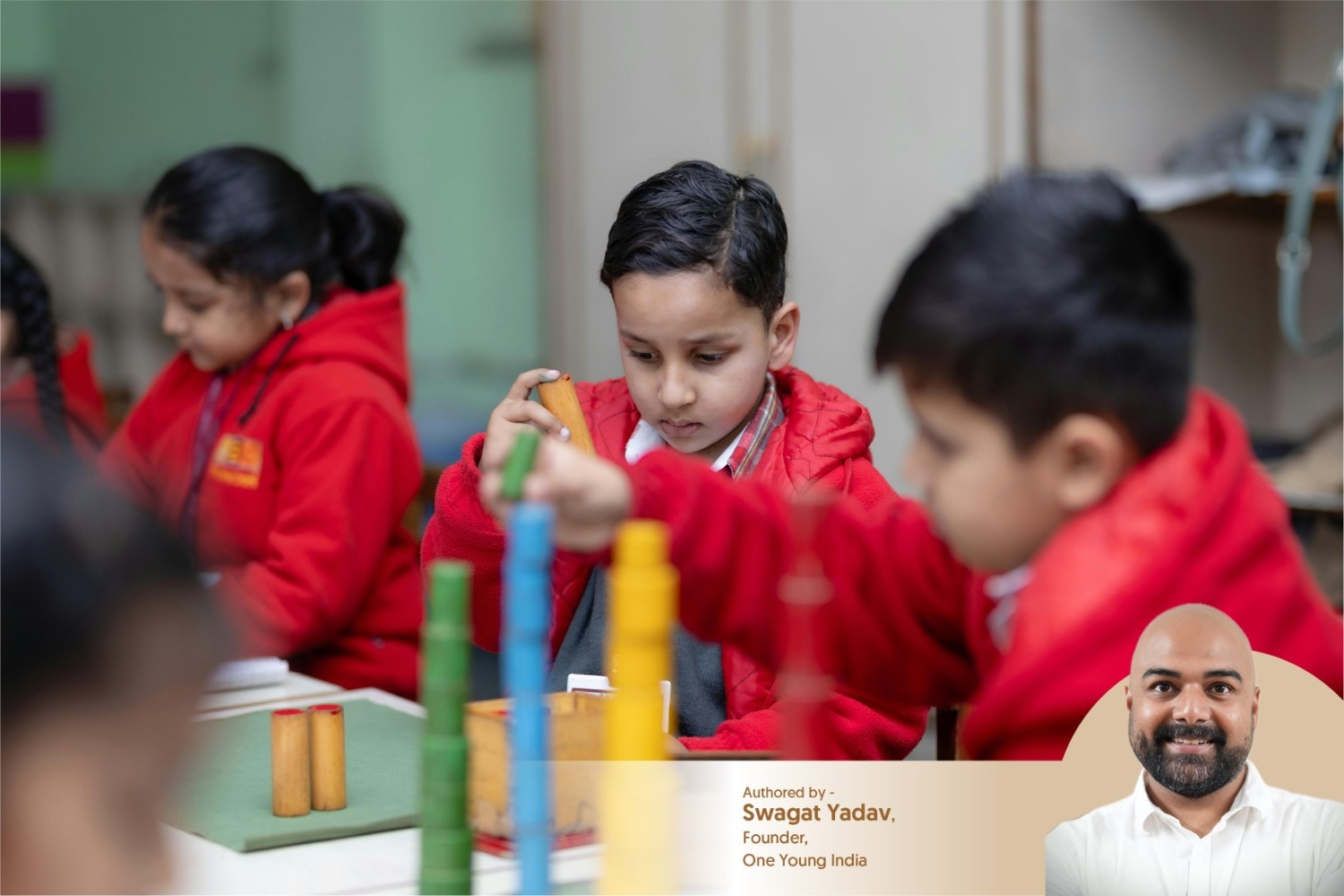
Learning is not a spectator sport. You cannot build resilience by reading about it on a whiteboard. Experiential learning is about moving from passive consumption to active creation. When I watch a seven-year-old dive into a DIY project, there is no fear of failure—only a relentless, unfiltered curiosity. They build, they break, and they iterate. We need to build maker spaces—both physical and mental—where students can get their hands dirty. When a student's mental model collides with the friction of the real world, that is where true education begins.
2. Interdisciplinary Engagement: Colliding Worlds
The most complex problems of tomorrow will not respect the neat borders of our academic subjects. The future belongs to those who can erase the artificial lines between science and the humanities. Innovation happens in the collision—when the psychology of code meets the biology of art, or when the framing of a photograph teaches you the master rules of design. We must stop raising specialists who stay strictly in their lanes and start cultivating Renaissance minds capable of synthesizing the noise.
3. Mentorship: The Shared Syllabus
Mentorship is often framed as a top-down transfer of wisdom from the "learned" to the learner. But the most effective mentorship requires a profound dismantling of the ego. It is about becoming co-pilots in the learning journey. A true mentor doesn't hand down an outdated map; they teach a student how to navigate without one. They model the three most terrifying, liberating words in the human language: I don't know. This brings us to the hardest truth of all.
Unlearning an outdated belief takes just as much effort as acquiring a new one. It is a painful withdrawal from the intoxication of being "right." Intellectual humility is not a trait you achieve once; it is a daily maintenance program. We must teach our students that waking up and abandoning a broken mental model is not a defeat—it is an upgrade.
We have to be committed to building this engine of Learnacy. We are building it for the students, the educators, and for ourselves.
Because the future will not belong to the learned. It will belong to the learners.