insights

IC3 Dialogues

Play icon

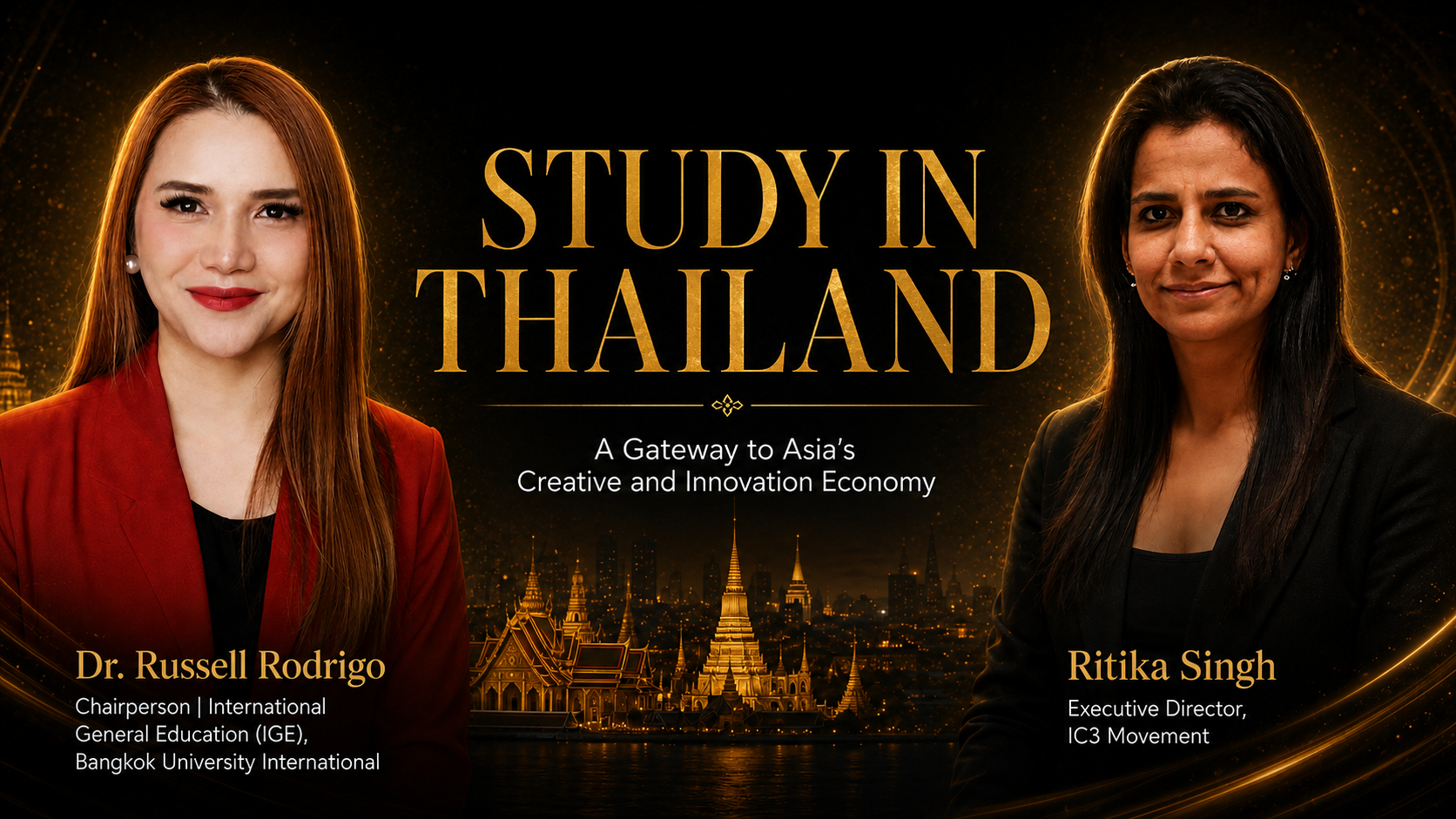
Why Southeast Asia is the New Hub for Creative Innovation & Education

Dr. Rodrigo, Chairperson of the International General Education Program at Bangkok University, and Ritika Singh, Executive Director - The IC3 Movement, discuss Thailand's emergence as an affordable and diverse hub for global higher education. Their conversation explores Bangkok University's commitment to experiential learning, entrepreneurial mindsets, and building the critical skills needed for an AI-driven world. Ultimately, the discussion highlights how studying in this dynamic environment can transform students into independent, globally-ready professionals.
Play icon

Unlearning Education: How to Stay Relevant in a Rapidly Changing World

In this candid conversation, Ronnie Screwvala, Chairperson & Co-Founder - upGrad, joins Ganesh Kohli, Founder of the IC3 Movement, to share his unique journey of resilience across diverse fields. He challenges conventional thinking in academia, emphasizing the need for educators to reinvent their approach, embrace vulnerability, and foster open-minded conversations. By redefining success away from short-term grades and shifting the focus to how students evolve over the next decade, the discussion highlights the ultimate importance of long-term life and career readiness. It serves as a compelling call to action for educators to move from clinical instruction to a dynamic framework centered on genuine connection and action-oriented learning.
Play icon

Skill Set vs. Industry: How to Choose Your Creative Path

Are you trying to "manicure" the perfect career path for yourself or your child? In this insightful conversation with Ganesh Kohli, Founder of IC3 Movement, Chaitanya Chinchlikar, Vice President, CTO & Emerging Media Head - Whistling Woods International, explains why curiosity - not just courage - is the ultimate driver of success in the modern world. Together, they discuss the transformation of creative education, the importance of curiosity in career development, and how institutions can stay relevant in a rapidly changing world. Explore the intersection of business, craft, and technology as they deconstruct the silos traditionally found in school education. Learn how institutions can stay relevant by "coming back from the future" to prepare students for careers that don't even exist yet.
Play icon

Are Degrees Enough Anymore? Preparing Students for the Jobs of Tomorrow

Education is evolving faster than ever. For generations, students followed a familiar path: choose a stream, earn a degree, and build a career. Today, that formula is being rewritten. Careers are becoming more dynamic, interdisciplinary, and skills-driven, requiring students to adapt, experiment, and continuously learn. In this episode of the IC3 Conversations, Ganesh Kohli, Founder - IC3 Movement, is joined by Dr. Indu Shahani, Founding President and Chancellor of ATLAS SkillTech University, to explore what education must look like in a world where careers are no longer linear and the most exciting opportunities often exist at the intersection of multiple disciplines.

Blogs

The Missing Lessons In Modern Education

• July 31 2026
Modern education equips students with academic knowledge but often overlooks the practical life skills needed beyond the classroom. From financial literacy and communication to career decision-making and resilience, many essential lessons are still left for students to learn through experience. As the world of work evolves rapidly, education must expand beyond examinations to prepare students for real-life challenges. Academic excellence should remain the foundation, but life skills must become an equally important part of learning.

The "MYTH" of a Perfect Career

• July 28 2026
The societal pressure to choose one "perfect," lifelong career places an immense psychological burden on students, often driving them to make fear-based decisions rather than pursuing their true passions. Influenced by family expectations, digital media, and a narrow definition of success tied to prestigious institutions, many young people limit their aspirations to a handful of traditional professions. However, this rigid mindset is fundamentally flawed because both individual interests and the global job market are constantly evolving. Instead of pressuring students to pick a single path, we should encourage self-discovery by focusing on what keeps them curious and what problems they actually enjoy solving. Ultimately, success lies not in finding a flawless profession at a young age, but in developing the adaptability and lifelong learning skills needed to build a meaningful career in a changing world.

Why Comparing Your Career Journey to Others Can Hold You Back

• July 17 2026
As students prepare for college and future careers, it's easy to fall into the trap of comparing our journey with someone else's. This blog explores why success has no universal timeline and how personal values, strengths, and aspirations shape every career path differently. By focusing on growth instead of comparison, students can build confidence, make more authentic career choices, and define success on their own terms. After all, the only career journey that truly matters is the one that's uniquely yours.

The Counselor's Role in an Age of AI

• July 13 2026
While AI provides instant, 24/7 access to vast career data and emerging trends, choosing a profession remains a deeply human decision. Artificial intelligence excels at delivering information, but it cannot navigate the emotional complexities, personal values, or anxieties that students face. Human counselors remain essential by offering the empathy and contextual wisdom needed to manage information overload and build long-term resilience. Ultimately, the future of career guidance is a partnership where AI supplies the data, and counselors help students discover their true purpose.

News & Updates

3
 mins
June 12, 2026

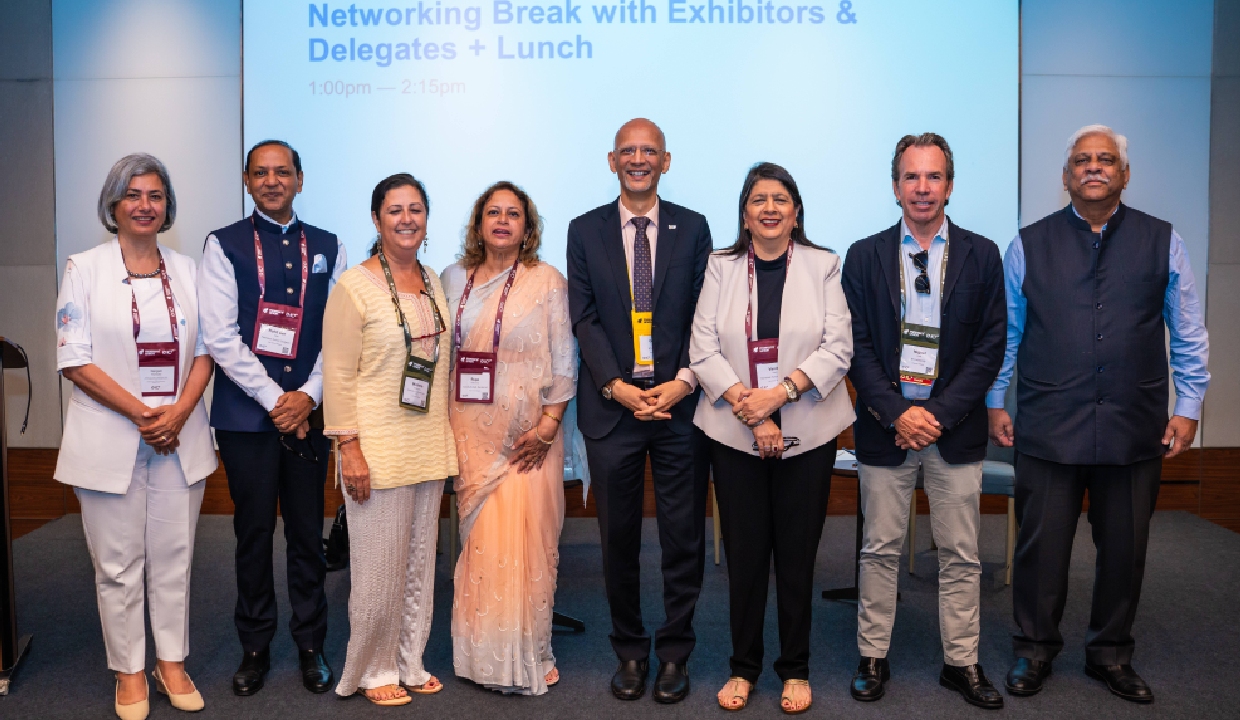
IC3 at 10: When Information Isn't Enough — Why the World's Educators Are Gathering in Mumbai

The complexity facing students today is real and growing. Artificial intelligence is not only reshaping what careers look like but also opening up entirely new pathways that did not exist a decade ago. "Students today have access to more opportunities and information than ever before," says Ritika Singh, Executive Director, IC3 Movement. "What is becoming increasingly important is ensuring they also have access to thoughtful guidance and support systems that help them navigate these opportunities, and that requires schools, universities, and organizations to come together, engage, and build those bridges collectively."
June 12, 2026

International education for Indians: A transition from 'study abroad' to 'global education'

Are Indian students changing how they look at international education? This well-researched feature dives into the shift from the traditional "study abroad" dream to a modern focus on ROI, flexibility, and employability. Backed by data and expert insights from Executive Director, IC3 Movement - Ritika Singh, discover how strategic counseling is helping students navigate the new global learning landscape.
May 27, 2026

Making sense of the recent changes in the CBSE curriculum

The article, authored by Ganesh Kohli, Founder of IC3 Movement, examines the broader significance of CBSE’s 2026–27 curriculum reforms and highlights how the education system is gradually shifting from rote learning towards competency-based learning, critical thinking, adaptability, and real-world application of knowledge. It further explores the growing role of AI literacy, interdisciplinary learning, and student flexibility within the evolving education landscape.
May 18, 2026

Ministry of Education's Career Cards initiative for Children with Special Needs (CwSN)

The article, authored by Ganesh Kohli - Founder of IC3 Movement, highlights that the Ministry of Education's introduction of Career Cards for Children with Special Needs (CwSN) under NEP 2020 is a significant step towards inclusive education, bringing structured career guidance into every learner's journey. It emphasises that schools integrating these tools into regular learning will be better positioned to support students, helping them explore options, understand their strengths, and make informed choices with confidence.