insights

IC3 Dialogues

Play icon

Skill Set vs. Industry: How to Choose Your Creative Path

Are you trying to "manicure" the perfect career path for yourself or your child? In this insightful conversation with Ganesh Kohli, Founder of IC3 Movement, Chaitanya Chinchlikar, Vice President, CTO & Emerging Media Head - Whistling Woods International, explains why curiosity - not just courage - is the ultimate driver of success in the modern world. Together, they discuss the transformation of creative education, the importance of curiosity in career development, and how institutions can stay relevant in a rapidly changing world. Explore the intersection of business, craft, and technology as they deconstruct the silos traditionally found in school education. Learn how institutions can stay relevant by "coming back from the future" to prepare students for careers that don't even exist yet.
Play icon

Are Degrees Enough Anymore? Preparing Students for the Jobs of Tomorrow

Education is evolving faster than ever. For generations, students followed a familiar path: choose a stream, earn a degree, and build a career. Today, that formula is being rewritten. Careers are becoming more dynamic, interdisciplinary, and skills-driven, requiring students to adapt, experiment, and continuously learn. In this episode of the IC3 Conversations, Ganesh Kohli, Founder - IC3 Movement, is joined by Dr. Indu Shahani, Founding President and Chancellor of ATLAS SkillTech University, to explore what education must look like in a world where careers are no longer linear and the most exciting opportunities often exist at the intersection of multiple disciplines.
Play icon

Higher Education: Investing in Your Future and Navigating Costs

Join Dr. Daniel Marschner, Director of International Recruitment at Loyola Marymount University, USA, and Dr. Pavak Vyas, Undergraduate Recruitment Officer, University of Waterloo, Canada, for a candid discussion on the realities of funding higher education in the U.S. and Canada. This video explores the rising costs of global education, provides a realistic perspective on full scholarships, and highlights innovative ways to make quality education more affordable. Discover the benefits of the co-op model, community college transfer paths, and how to view your degree as a long-term investment in your career and life. Whether you're a student, parent, or counselor, this conversation offers valuable insights into finding the "right fit"—academically, socially, and financially.
Play icon

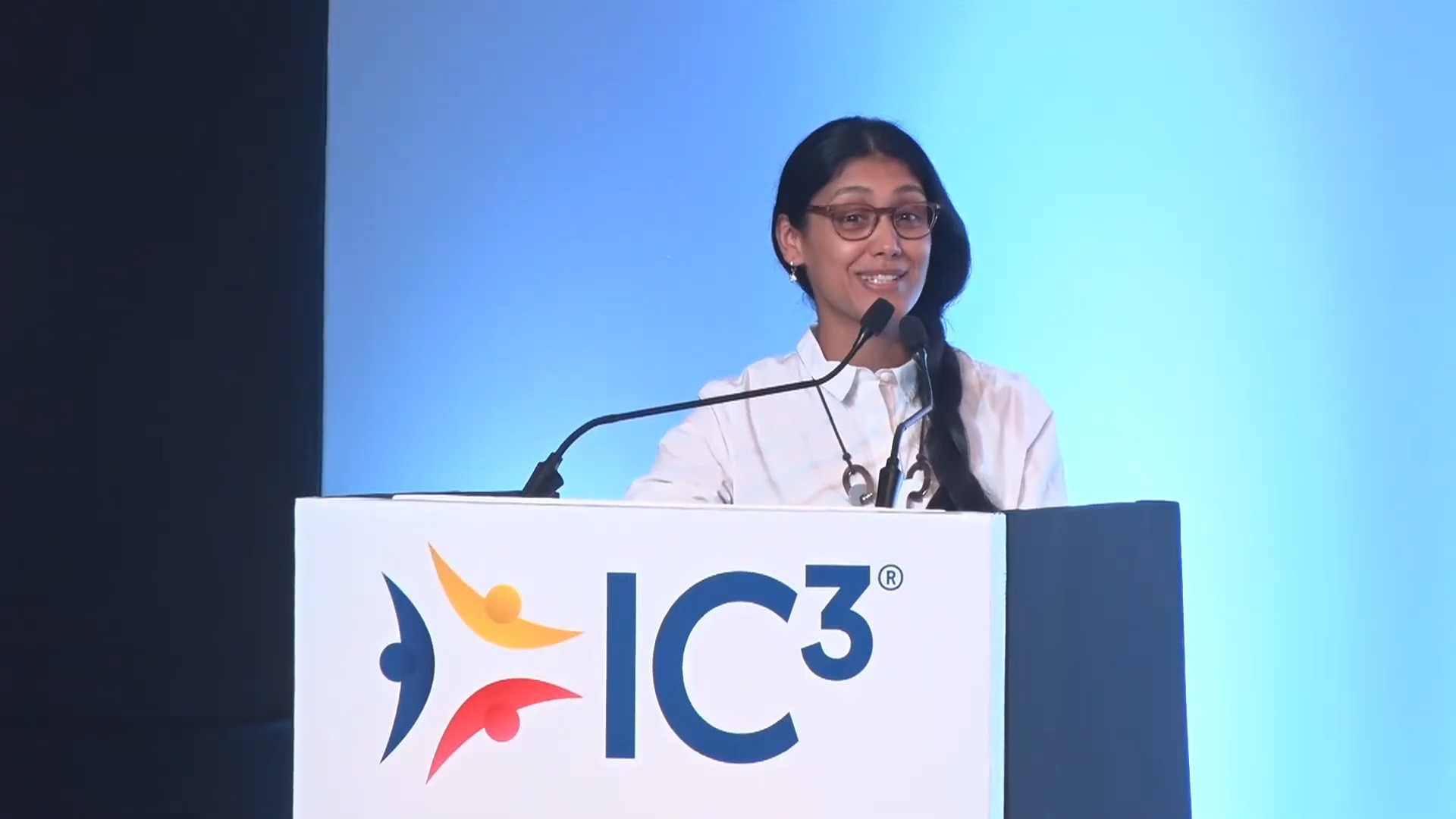
Opening Keynote by Roshni Nadar Malhotra | 5th Annual IC3 Conference

At the 5th Annual IC3 Conference, Roshni Nadar Malhotra, Chairperson, HCL Technologies & Trustee, Shiv Nadar Foundation was the keynote speaker for the opening plenary. Committee. She is a Trustee of the Shiv Nadar Foundation, which has invested $988 million in nation-building institutions and has driven transformational leadership since inception in 1994. Passionate about wildlife and conservation, Roshni established The Habitats Trust in 2018, which works to protect India’s natural habitats and indigenous species. In recognition of her outstanding work both in business and in philanthropy, Roshni has received several honors and accolades including being featured in "The World's 100 Most Powerful Women" compiled and released by Forbes, in 2020 for the fourth consecutive year.

Blogs

Can School Teach Confidence, Or Is It Learned Through Experience?

• 25 August 2026
Telling young people to "just be confident" fails because confidence is not a loud performance or an academic subject that can be directly taught. True self-belief develops through lived experience, as students gather personal evidence that uncertainty, mistakes, and fear are survivable. Schools cannot hand out confidence, but they can deliberately create repeated, meaningful opportunities for students to speak, lead, and participate. These experiences must take place in an emotionally safe environment where making mistakes does not carry the threat of judgment or humiliation. Genuine confidence manifests differently for everyone, meaning quiet competence and individual talents are just as valid as loud public speaking. Ultimately, confidence is not a curriculum topic waiting to be taught, but a natural byproduct of having safe spaces to try.

More Than Just Marks: The Hidden Battle for Student Wellbeing

• 07 August 2026
Students are battling intense, sustained pressure, sleep deprivation, and loneliness driven by relentless academic demands and toxic social media comparison. This chronic stress is not merely a personal issue but a structural problem that directly impairs cognitive function, memory, and academic performance. Despite these ongoing challenges, recent surveys show a hopeful decline in severe student depression, largely credited to better institutional support and counseling. Wellbeing can be improved through practical habits like prioritizing sleep, establishing screen-time boundaries, staying physically active, and seeking professional help. True student wellbeing requires a united effort from parents, teachers, and educational systems to prioritize mental health as the essential foundation of all learning.

The Hidden Curriculum - Life happening in between classes

• 04 August 2026
In "The Hidden Curriculum," Viha Jain explores how vital life skills—like navigating uncertainty and building relationships—occur quietly in the spaces between formal classes. While schools prioritize measurable grades, everyday experiences like group projects and sending intimidating emails actually teach resilience, empathy, and courage. These intangible lessons are rarely recognized in the moment and are often mistakenly assumed to be innate personality traits rather than learned behaviors. Ultimately, this hidden curriculum goes beyond teaching academic knowledge to subtly and profoundly shape the kind of person you are becoming.

The Missing Lessons In Modern Education

• July 31 2026
Modern education equips students with academic knowledge but often overlooks the practical life skills needed beyond the classroom. From financial literacy and communication to career decision-making and resilience, many essential lessons are still left for students to learn through experience. As the world of work evolves rapidly, education must expand beyond examinations to prepare students for real-life challenges. Academic excellence should remain the foundation, but life skills must become an equally important part of learning.

News & Updates

Wellbeing
3
 mins
March 7, 2026

Preparing students for exams beyond the syllabus

Ganesh Kohli, Founder of IC3 Movement, highlights the importance of emotional readiness alongside academic preparation during the board examination season, bringing attention to the growing pressure students face beyond the syllabus in this authored article.
Wellbeing
5
 mins
March 3, 2026

Why are female students reporting higher stress and anxiety levels than their male counterparts in schools?

The IC3 Student Well-being Pulse Report (2025), drawing on responses from students across schools, exposes a widening gender gap in stress, anxiety, and emotional security. Nearly 1 in 3 female students rarely or never feel calm and relaxed, compared to about 1 in 4 boys, according to the IC3 report.
February 16, 2026

Beyond Marks: Why Counseling Must Become Core Infrastructure In Indian Schools

Ganesh Kohli, Founder of IC3 Movement, reflects IC3’s sustained work over the past decade in building counseling ecosystems across schools and advocating for structured, continuous guidance as a core part of education. He reinforces IC3’s perspective that counselling must move from being an optional or late-stage service to becoming an integral component of school readiness and student well-being.
February 9, 2026

Stress does not begin in exam hall, it builds gradually

Ganesh Kohli, Founder of the IC3 Movement, explores how student stress is cumulative and often begins much before examinations, driven by sustained academic pressure, performance expectations, and uncertainty around future pathways. He highlights that emotional fatigue, lack of clarity, and limited access to structured guidance frequently shape students’ experiences during board exam periods.