insights

IC3 Dialogues

Play icon

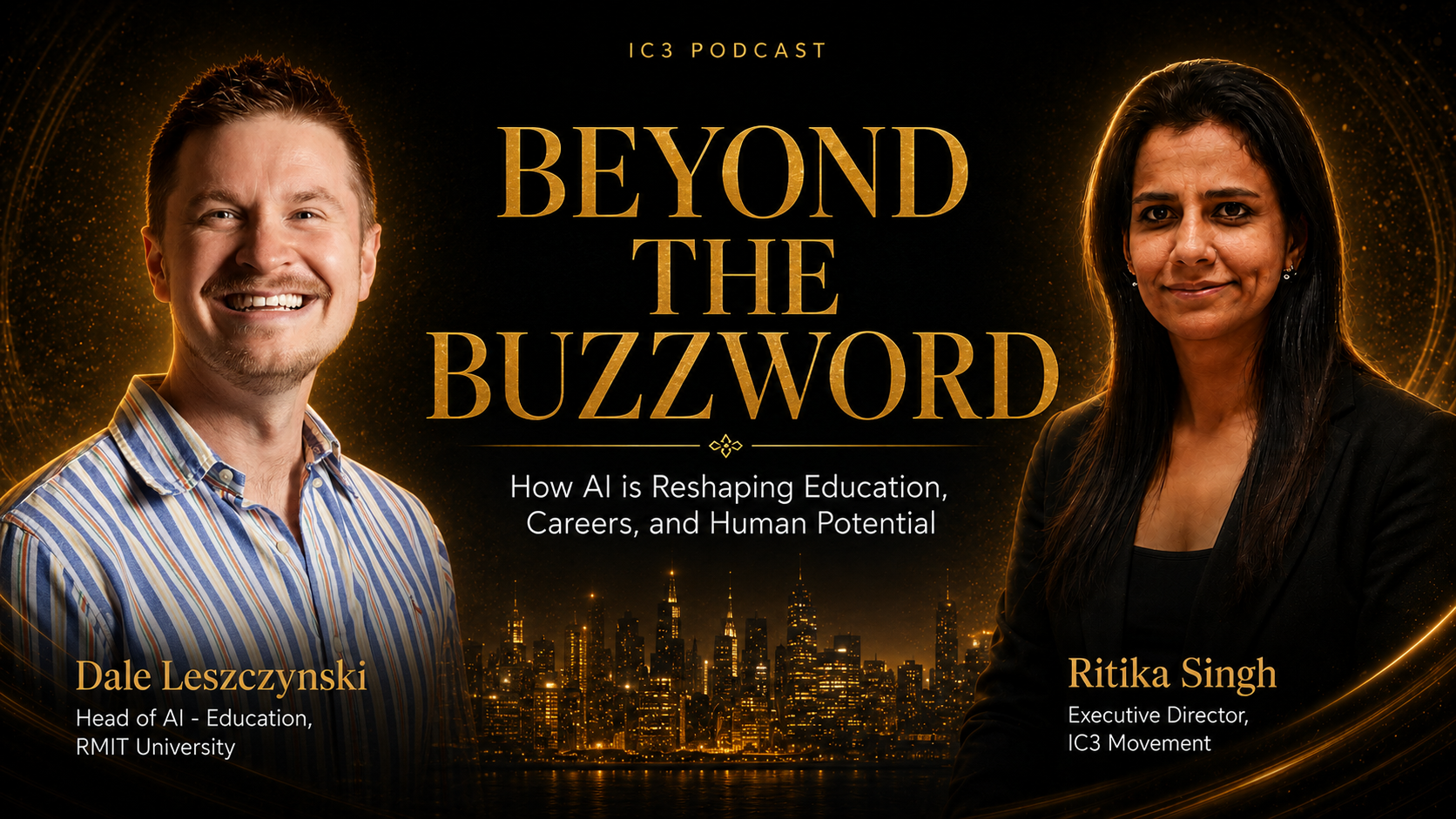
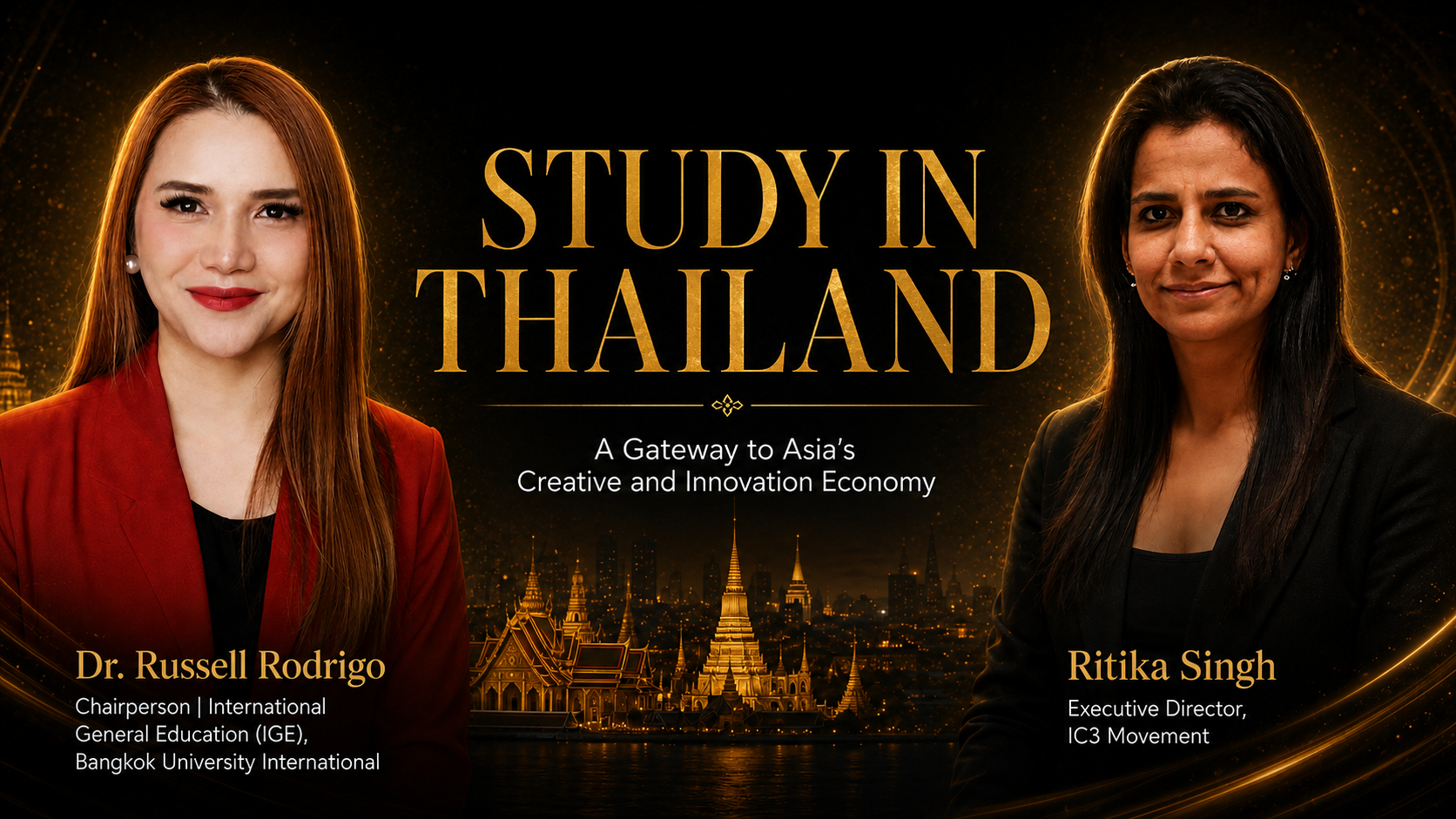
Why Southeast Asia is the New Hub for Creative Innovation & Education

Dr. Rodrigo, Chairperson of the International General Education Program at Bangkok University, and Ritika Singh, Executive Director - The IC3 Movement, discuss Thailand's emergence as an affordable and diverse hub for global higher education. Their conversation explores Bangkok University's commitment to experiential learning, entrepreneurial mindsets, and building the critical skills needed for an AI-driven world. Ultimately, the discussion highlights how studying in this dynamic environment can transform students into independent, globally-ready professionals.
Play icon

Unlearning Education: How to Stay Relevant in a Rapidly Changing World

In this candid conversation, Ronnie Screwvala, Chairperson & Co-Founder - upGrad, joins Ganesh Kohli, Founder of the IC3 Movement, to share his unique journey of resilience across diverse fields. He challenges conventional thinking in academia, emphasizing the need for educators to reinvent their approach, embrace vulnerability, and foster open-minded conversations. By redefining success away from short-term grades and shifting the focus to how students evolve over the next decade, the discussion highlights the ultimate importance of long-term life and career readiness. It serves as a compelling call to action for educators to move from clinical instruction to a dynamic framework centered on genuine connection and action-oriented learning.

Blogs

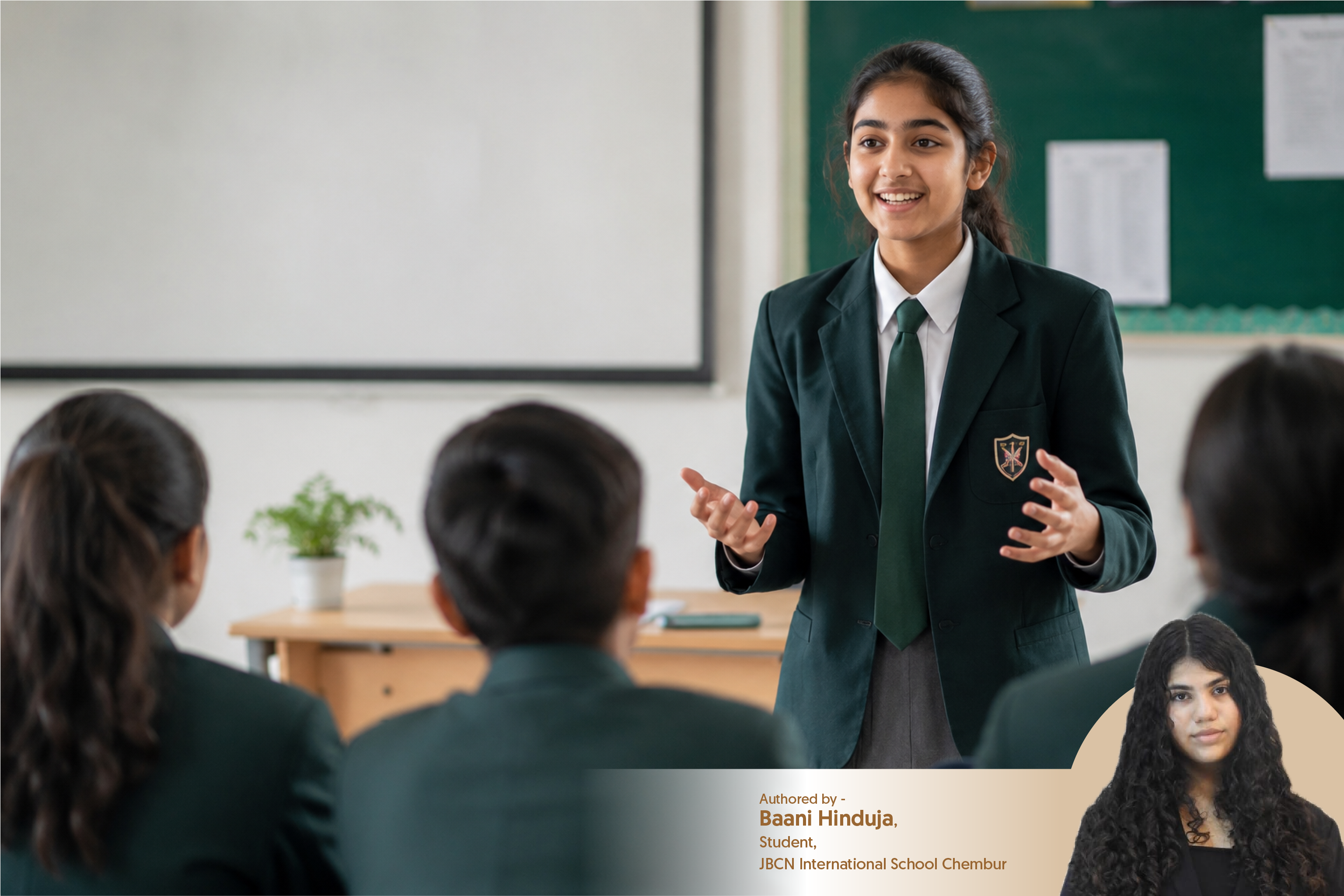
Can School Teach Confidence, Or Is It Learned Through Experience?

• 25 August 2026
Telling young people to "just be confident" fails because confidence is not a loud performance or an academic subject that can be directly taught. True self-belief develops through lived experience, as students gather personal evidence that uncertainty, mistakes, and fear are survivable. Schools cannot hand out confidence, but they can deliberately create repeated, meaningful opportunities for students to speak, lead, and participate. These experiences must take place in an emotionally safe environment where making mistakes does not carry the threat of judgment or humiliation. Genuine confidence manifests differently for everyone, meaning quiet competence and individual talents are just as valid as loud public speaking. Ultimately, confidence is not a curriculum topic waiting to be taught, but a natural byproduct of having safe spaces to try.

More Than Just Marks: The Hidden Battle for Student Wellbeing

• 07 August 2026
Students are battling intense, sustained pressure, sleep deprivation, and loneliness driven by relentless academic demands and toxic social media comparison. This chronic stress is not merely a personal issue but a structural problem that directly impairs cognitive function, memory, and academic performance. Despite these ongoing challenges, recent surveys show a hopeful decline in severe student depression, largely credited to better institutional support and counseling. Wellbeing can be improved through practical habits like prioritizing sleep, establishing screen-time boundaries, staying physically active, and seeking professional help. True student wellbeing requires a united effort from parents, teachers, and educational systems to prioritize mental health as the essential foundation of all learning.

The Hidden Curriculum - Life happening in between classes

• 04 August 2026
In "The Hidden Curriculum," Viha Jain explores how vital life skills—like navigating uncertainty and building relationships—occur quietly in the spaces between formal classes. While schools prioritize measurable grades, everyday experiences like group projects and sending intimidating emails actually teach resilience, empathy, and courage. These intangible lessons are rarely recognized in the moment and are often mistakenly assumed to be innate personality traits rather than learned behaviors. Ultimately, this hidden curriculum goes beyond teaching academic knowledge to subtly and profoundly shape the kind of person you are becoming.

The Missing Lessons In Modern Education

• July 31 2026
Modern education equips students with academic knowledge but often overlooks the practical life skills needed beyond the classroom. From financial literacy and communication to career decision-making and resilience, many essential lessons are still left for students to learn through experience. As the world of work evolves rapidly, education must expand beyond examinations to prepare students for real-life challenges. Academic excellence should remain the foundation, but life skills must become an equally important part of learning.

News & Updates

November 21, 2025

Counselling must be the central part of a student's journey

True growth happens when students are allowed to explore their own path, guided by the right support, writes Ganesh Kohli. Counselling is not just a service that schools offer; it is a core part of helping students navigate life’s challenges. Counselling should be embedded into the fabric of every institution, supporting students through academic and personal transitions
November 19, 2025

How teachers balance academic instruction with emotional care, shaping students’ overall growth

Drawing from insights highlighted in recent IC3 reports, including the IC3 Student Well-being Pulse Report 2025, a growing need for emotionally intelligent institutions, structured support systems, and leadership that prioritises well-being alongside academic outcomes is needed. It reinforces IC3’s longstanding advocacy for comprehensive counseling frameworks that make classrooms emotionally safe spaces for all students.
Wellbeing
3
 mins
November 14, 2025

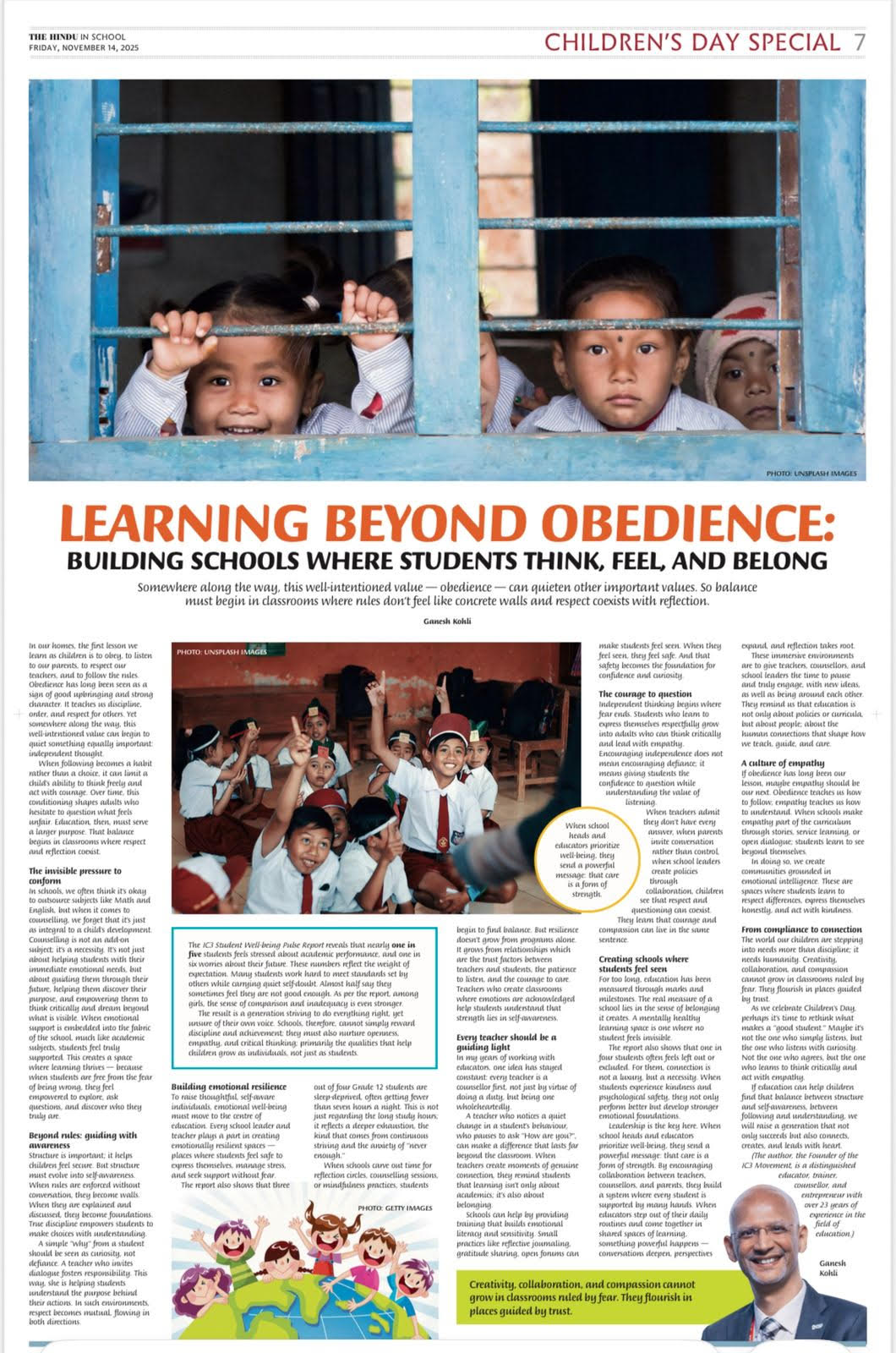
Learning Beyond Obedience: Building Schools Where Students Think, Feel, and Belong

The IC3 Student Well-being Pulse Report reveals that nearly one in five students feels stressed about academic performance, and one in six worries about their future. These numbers reflect the weight of expectation. Many students work hard to meet standards set by others while carrying quiet self-doubt. Almost half say they sometimes feel they are not good enough. As per the report, among girls, the sense of comparison and inadequacy is even stronger. The result is a generation striving to do everything right, yet unsure of their own voice. Schools, therefore, cannot simply reward discipline and achievement: they must also nurture openness, empathy, and critical thinking, primarily the qualities that help children grow as individuals, not just as students.
Wellbeing
3
 mins
November 10, 2025

India accounts for one in nine of global student suicides: Report

A new study points to mounting pressure in schools and colleges nationwide as the key cause of student suicides, underscoring a deepening mental-health crisis among students