insights

IC3 Dialogues

Play icon

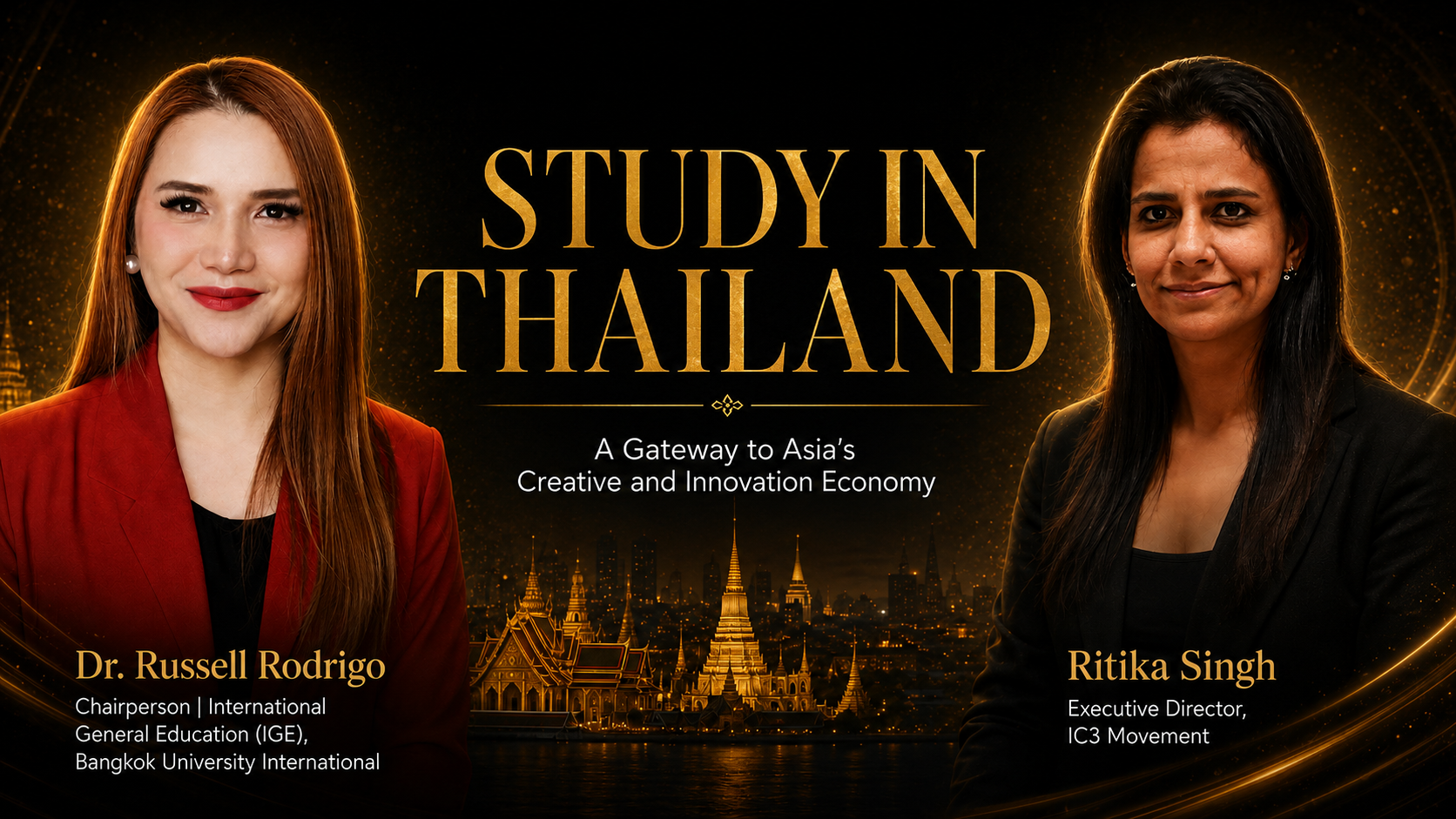
Why Southeast Asia is the New Hub for Creative Innovation & Education

Dr. Rodrigo, Chairperson of the International General Education Program at Bangkok University, and Ritika Singh, Executive Director - The IC3 Movement, discuss Thailand's emergence as an affordable and diverse hub for global higher education. Their conversation explores Bangkok University's commitment to experiential learning, entrepreneurial mindsets, and building the critical skills needed for an AI-driven world. Ultimately, the discussion highlights how studying in this dynamic environment can transform students into independent, globally-ready professionals.

Blogs

Career Guidance Isn’t Just for the Privileged

• 20 October 2025
At the heart of the IC3 Movement lies a simple but profound mission: to bring career and college counseling into every school, for every student, everywhere. This mission challenges an uncomfortable truth that access to good guidance often depends on where you live, what your family earns, or the networks you are born into. For too long, career guidance has been viewed as a luxury, available mostly to those in well-resourced schools or urban centers. IC3 exists to make sure that changes.

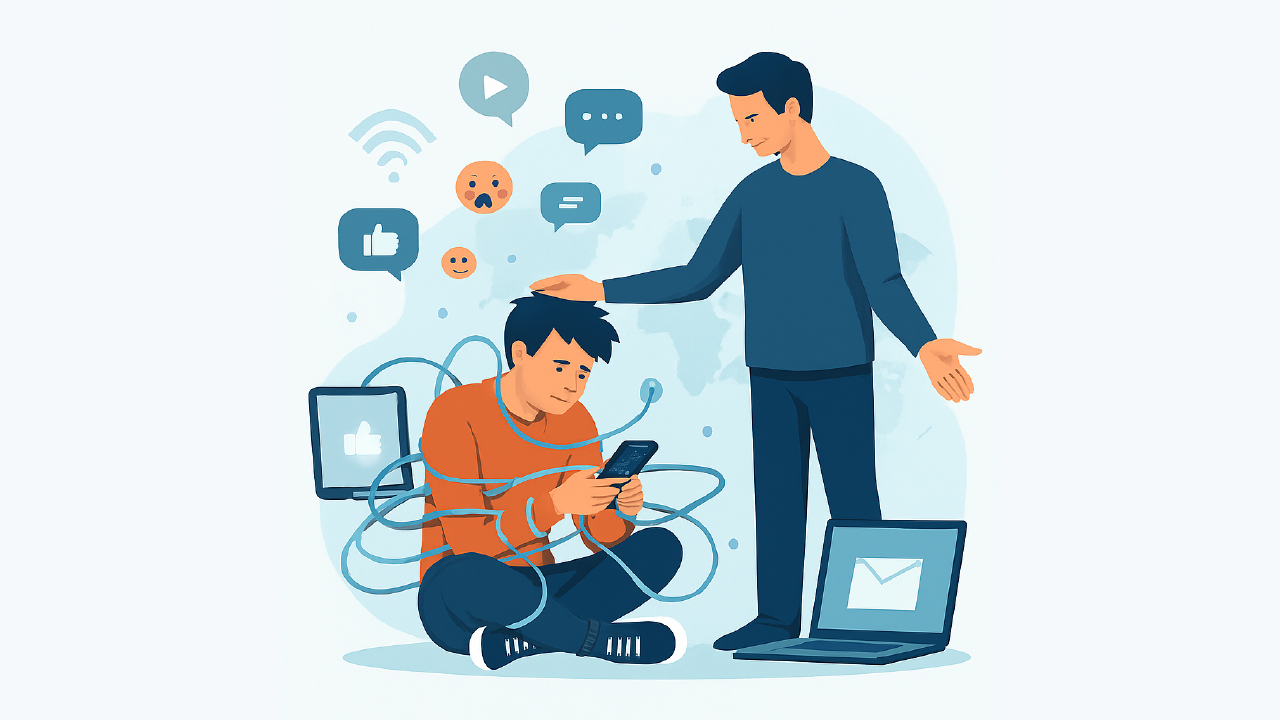
Digital Addiction and the Need for Human Guidance in a Hyperconnected World

• 13 October 2025
Walk into any classroom or hallway today, and you will see students with eyes fixed on their phones, laptops, or tablets. Technology is everywhere, and it is shaping how students learn, connect, and dream about the future. While the digital world offers incredible opportunities, it also raises important questions about balance, well-being, and human connection. This is where counselors, especially career and college counselors, come in. In a hyperconnected world, counselors are not only helping students choose careers and universities. They are also guiding them to use technology wisely, balance screen time, and connect with their true aspirations.

Regional Conferences Leading the Way in the Next Decade of Counseling

• 06 October 2025
As the IC3 Movement enters its 10th year, we pause to reflect on how far we have come and look ahead with excitement at what lies before us. Over the past decade, the IC3 Movement was built by the global community of counselors, educators, universities, and partners who believe that counseling belongs in every school. This vision is not just an aspiration anymore; it is a reality that continues to grow stronger with each year. In this landmark year, IC3 Regional Conferences are being introduced as they stand as a symbol of how the Movement is deepening its impact. They embody IC3’s mission of making high-quality counseling accessible, inclusive, and sustainable across diverse regions of the world.

The Untapped Power of Governments in Mainstreaming School Counseling

• 24 September 2025
Have you ever noticed how when schools, communities, NGOs, and government institutions team up, public school counseling begins to shift from aspiration into action? For the IC3 Movement, highlighting these collaborations shows how education policy, public school counseling, and government and education reform can work together with inspiring results.

News & Updates

Wellbeing
5
 mins
October 26, 2026

Making Mental Health Support More Accessible to Students

Neha Bahl, Executive Director, IC3 Institute, explores the need to make mental health support more accessible to students, highlighting the importance of creating supportive environments where they can seek help and address their emotional well-being. She reinforces IC3’s focus on student well-being and the need to make mental health support an integral part of the education ecosystem.
Wellbeing
5
 mins
October 25, 2026

IC3 CISCE Survey: 59% of Class 12 Students Are Not Satisfied with Their School Life

A joint survey by the IC3 Institute and CISCE reveals that 59% of Class 12 students are dissatisfied with their school life, acting as a wake-up call for the education system. This dissatisfaction is primarily driven by the relentless pressures of board exams, competitive entrance tests, and heavy societal expectations during this pivotal year. The article highlights that prioritizing academic performance over holistic development has stripped away the joy of learning and left many students completely burnt out. The findings serve as a catalyst for systemic change, emphasizing that superficial wellness workshops are no longer sufficient to address this growing crisis.
Wellbeing
5
 mins
October 24, 2026

Class 12 Students are Struggling: 59% Report Low Satisfaction with School Life

A nationwide survey of 8,515 students reveals a sharp decline in mental well-being and school satisfaction as students progress to Class 12. The 2025-26 Student Well-being Pulse Report shows that 59% of Class 12 students experience low satisfaction with school life, compared to just 23% in Class 8. Positive traits like happiness, confidence, and motivation decrease with age, while negative emotions such as anxiety and low energy rise significantly during the final school years. Despite these academic struggles, 63% of students maintain high satisfaction in their personal lives and relationships with family and friends. Experts attribute this academic distress to mounting exam pressure, career decisions, and the transition to higher education. The report urges schools to integrate accessible, proactive emotional support systems alongside standard academic preparation.
Wellbeing
6
 mins
October 10, 2026

World Mental Health Day 2026: Is the newer generation's mental health awareness clashing with parental stigma?

According to IC3 Institute's Student Well-being Pulse Report 2026, based on responses from 8,515 students across Grades 8 to 12, 64 per cent of students prefer to deal with stress themselves. Meanwhile, 49 per cent turn to friends and 44 per cent to family. Only 6 per cent approach a school counsellor and 2 per cent a therapist, even though 52 per cent believe counselling or therapy can b e helpful. On World Health Day 2026, Neha Bahl, Executive Director of IC3 Institute, discusses what young people are struggling with, why they may hesitate to seek help, and how families and educational institutions can respond.